Founders, managing directors, and enterprise IT leaders frequently commence business digitization using off-the-shelf SaaS platforms (Zoho, Salesforce, Shopify, generic ERP subscriptions) because of low initial friction. However, as business scale accelerates and employee headcounts expand from 10 to 50 or 250 logins, monthly per-seat licensing fees compound into an unsustainable, permanent operational bleed.
- Per-User License Fees
₹0/ mo
Unlimited team logins with zero recurring per-seat extortion.
- IP & Code Ownership
100%
Full repository, database schema, and design asset transfer.
- 3-Year Cost Advantage
3.5x
Lower total cost of ownership compared to enterprise SaaS subscriptions.
Beyond financial hemorrhage, businesses collide with insurmountable operational walls. Your team is forced to bend unique proprietary business logic to match someone else's rigid generic software constraints. When you request a custom field, a regional language translation, or a custom WhatsApp trigger, SaaS providers reply that it is not on their quarterly product roadmap.
Key Takeaway · Software Economics
Renting SaaS is like paying monthly commercial rent forever. Building custom software is owning the building — a capital asset on your balance sheet that bends to your exact workflow.
Consult on Custom Software Build1. 3-Year Total Cost Comparison: 50-User Organization
FIG 9.1
- Enterprise SaaS ($50/user) — ₹54L₹54L
- Mid-Market SaaS ($25/user) — ₹27L₹27L
- Bihar Innovation Custom Build — ₹9.5L₹9.5L
Based on 50 team logins across ERP, CRM, and accounting modules with typical 15% annual SaaS price hikes.
2. 36-Month Cost Divergence Curve: SaaS Rental vs Software Ownership
CHART 9.2
SaaS costs compound continuously with headcounts, whereas custom software costs plateau after deployment.
3. The 4-Stage Migration from SaaS Rental to Code Ownership
- 01
SaaS Workflow Audit
Identify the 20% of features your team actually uses and the 80% fluff you overpay for.
- 02
Custom Cloud Architecture
Design clean modern database schemas and fast API-driven web/mobile interfaces.
- 03
Sprint Demos & Testing
Weekly live demos where your department heads test real working software before launch.
- 04
Clean Cutover & Handover
Historical database import, staff training, and 100% source code repository transfer.
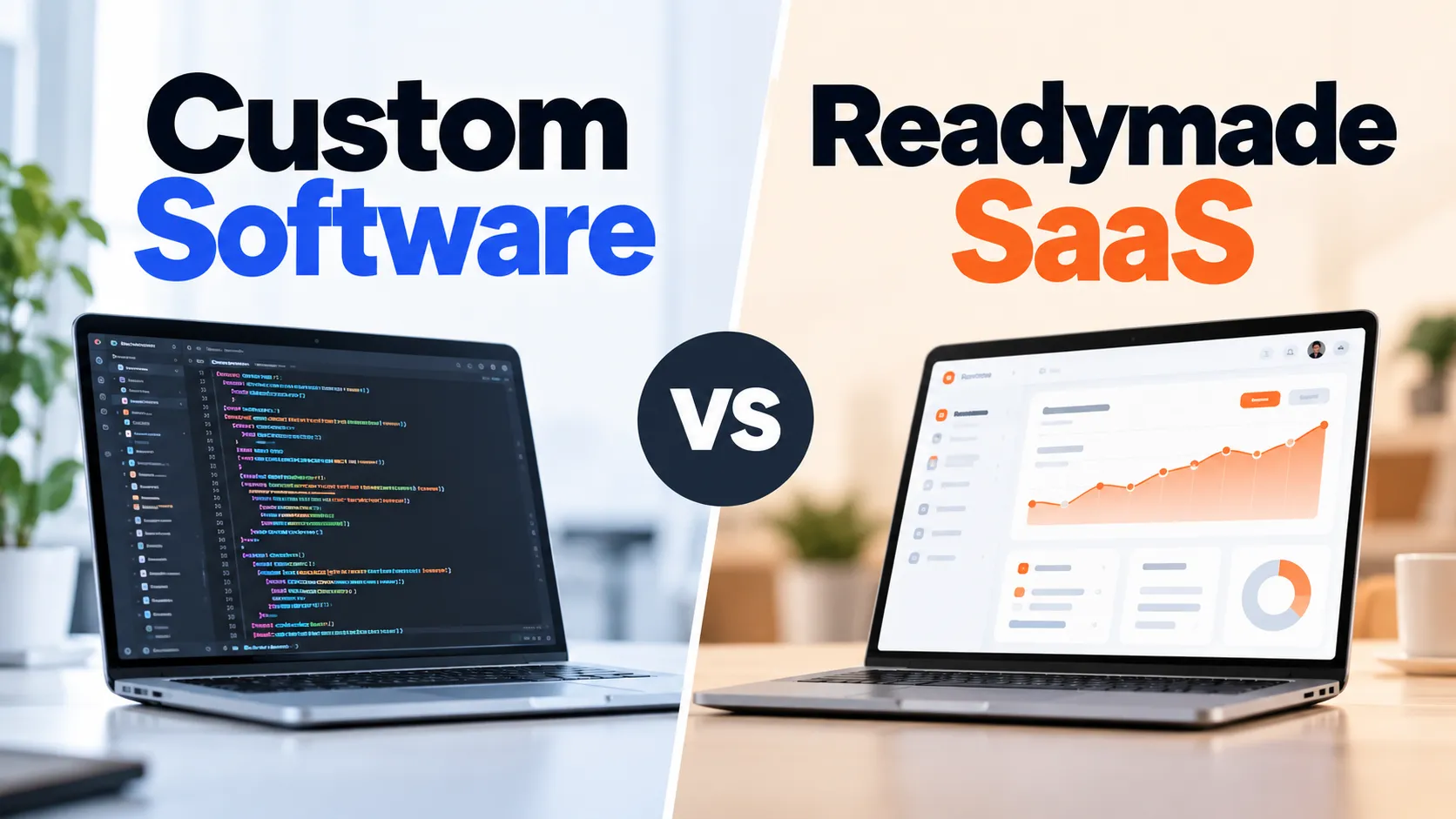
4. Detailed Comparison: Custom Software vs Readymade SaaS
| Evaluation Metric | Readymade SaaS | Bihar Innovation Custom Software |
|---|---|---|
| Per-Seat Licensing Fee | High monthly recurring fee per user | Zero ongoing per-user license fee |
| Source Code Ownership | 0% (Vendor proprietary lock-in) | 100% owned by your company |
| Workflow Customization | Rigid, limited to preset settings | Unlimited, tailored to your exact business SOPs |
| Data Privacy & Hosting | Stored on vendor multi-tenant servers | Hosted on your private encrypted cloud |
| Balance Sheet Valuation | Pure operational expense (OpEx) | Capitalized intangible tech asset (CapEx) |
5. The IP Ownership Principle
When Bihar Innovation builds software for your business, the intellectual property is completely yours. All Git repositories, Docker deployment configurations, PostgreSQL database scripts, and Figma UI design assets are transferred to your company accounts upon project sign-off. You are never held hostage by proprietary vendor locks.
Questions about this guide
How long does it take to build custom business software?
Most custom ERP, CRM, and portal systems are built and launched in phases within 6 to 12 weeks, with functional milestones delivered for testing every two weeks.
What happens if we need new features in the future?
Because you own 100% of the code, you can engage Bihar Innovation for future feature phases or have your own internal developers extend the codebase without paying licensing penalties.
Where is our business data stored?
Your database is hosted on your own dedicated cloud account (AWS, Google Cloud, DigitalOcean, or private data centers in India) with automated encrypted daily backups.
Can custom software migrate our existing data from Excel or Zoho?
Yes. Our engineering team builds automated data ingestion scripts to clean, normalize, and migrate all your historical customer records, ledgers, and transactions with zero data loss.
Is custom software more secure than public cloud SaaS?
Yes. In public SaaS, your sensitive business records share database clusters with thousands of other companies (multi-tenant). Custom software operates on single-tenant encrypted infrastructure with private VPC firewalls.